Brittany breed guide
The Brittany is an agile, versatile sporting dog originating from the Brittany region of northwestern France, where it was bred to hunt, point, and retrieve. Lively, affectionate, and full of energy, the Brittany is equally at home working in the field or curled up on the couch with its family. If you lead an active lifestyle and are looking for a devoted, fun-loving companion to share it with, the Brittany might just be the perfect dog for you.
Temperament
The Brittany is an eager-to-please, sweet-natured, and sensitive breed with a happy-go-lucky spirit. They are highly social and love the company of people of all ages, as well as other dogs - convinced the world is their playground and everyone should love them. They are intelligent, people-oriented and make excellent family pets as well as working or performance sports dogs. Brittanys are cuddly so don't expect to keep them off the couch. They are not a good guard dog, but they excel at obedience, agility, tracking, and other dog sports.
Ideal Home
The Brittany thrives in an active household. They are friendly and get along well with other dogs, and can live happily with cats and other animals if raised with them from a young age. They are not suited to a sedentary lifestyle and do best when included in daily activities.
Exercise & Space Needs
Brittanys are highly energetic and require vigorous daily exercise. A securely fenced yard is essential, as the breed needs room to be outside and to run. Physical exercise sessions should not exceed 30–60 minutes at a time, but mental stimulation (such as puzzles, scent games, kibble trails, hide-and-seek with toys, and focus training) should make up around two hours per day.
Training & Socialisation
Early and thorough socialisation is essential. Without it, Brittanys can become shy. Even among well-socialised dogs there is variation in friendliness, so consistent exposure from a young age is important.
Brittanys are quick learners and eager to please, but their sensitivity means the training approach matters. They do not respond well to harsh or heavy-handed methods and thrive with positive reinforcement. The Brittanys' original purpose was a combination of pointer, retriever, and hunting dog, which had them walking ahead of their human partner when at work, so they have a natural tendency to pull and can become easily distracted off-lead if recall isn't established early.
Grooming
The Brittany has a wash-and-wear coat, making grooming straightforward. A bath and brush once a fortnight (or as needed) is generally enough. While they do shed, they are not heavy shedders and won't leave clumps of hair around the house.
Health
The Brittany is generally a healthy and robust breed with a lifespan of approximately 12-14 years. Responsible breeders health-test their breeding stock for hips, elbows, and eyes prior to breeding. The breed does not carry many hereditary health problems due to its balanced build, though hip dysplasia and epilepsy are conditions to be aware of.
History
The name "Brittany" comes from the Brittany region of northwestern France, where the breed originated. Orange and white Brittany-like dogs appear in tapestries and paintings as far back as the 17th century.
Although it resembles a spaniel in appearance, its working style is closer to that of a pointer or setter. Australia officially changed the name from "Brittany Spaniel" to "Brittany" in 1998 to reflect this. Related utility gundogs include the German Shorthaired Pointer, Hungarian Vizsla, and Weimaraner.
Appearance
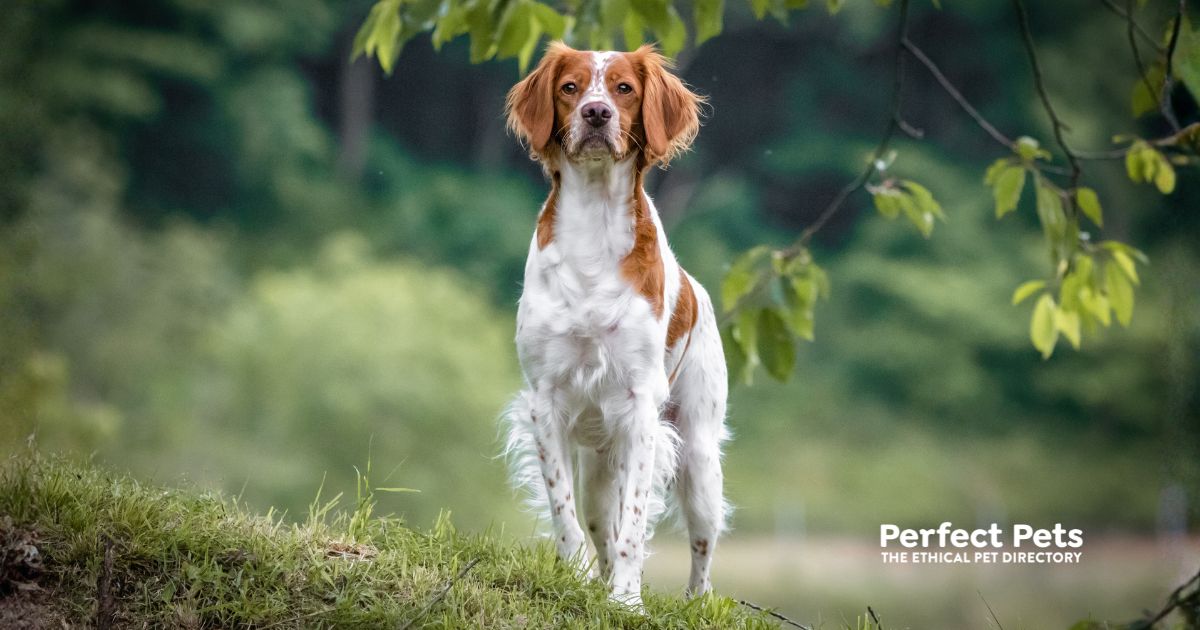
Size: 45–52 cm tall, 14–18 kg
Brittanys are athletic, compact, and solidly built without being heavy. Coat colours include orange and white, black and white, liver and white.
Is the Brittany a Good Family Pet?
Yes. Brittanys are charming, social, and personable members of the household. They are lively and fun-loving, always up for a game in the yard or a cuddle inside, and their joyful spirit makes them a genuine pleasure to live with.
They are excellent with children, particularly those aged four or five and up. Younger children may occasionally get knocked over or have their faces enthusiastically washed by an exuberant Brittany, so some supervision is recommended with toddlers.
Sources: Grandesprit Homestead, Kirinbell Kennels, Kylibri Brittanys
Last updated: May 2026. If you have photos or information you’d like to contribute, please get in touch.
If you are a small scale ANKC registered breeder and would like to be listed here, just contact us or follow a few simple steps to add your details yourself.
We welcome helpful comments and contributions to information about this breed by email
View Brittany breeders